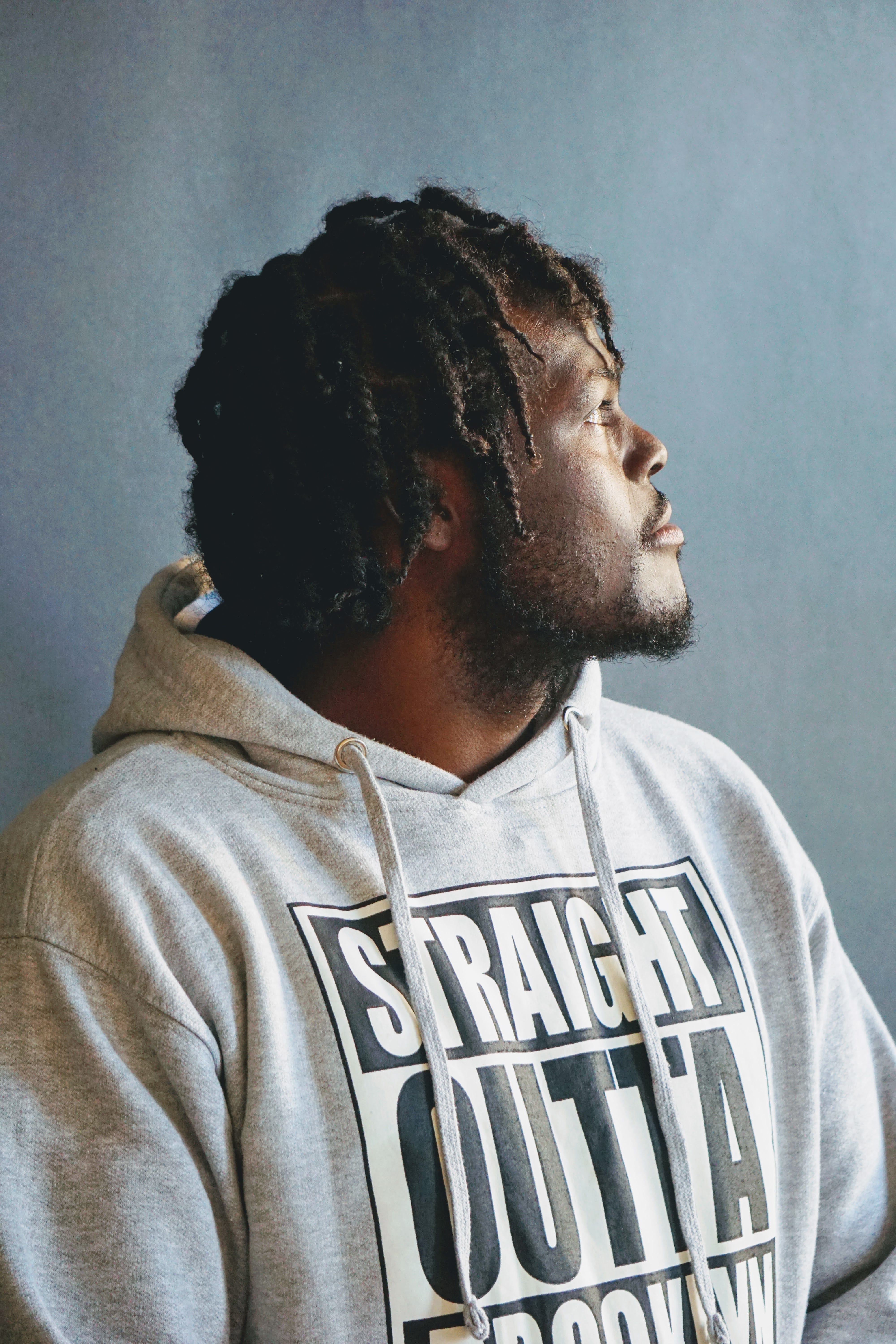
The Lion
How the betrayal of his loyalty made him reevaluate his commitments.

I’m happy with waking up and coming to the job every day. I’m happy with me living in my Black skin and knowing who I am every day.
~Dwayne McCord
This interview was conducted in March 2022. You can listen to the entire conversation between Kathryn and Dwayne, including the transcript, here.
Content Warning: Explicit Language, Physical Assault, Racism, Verbal Abuse
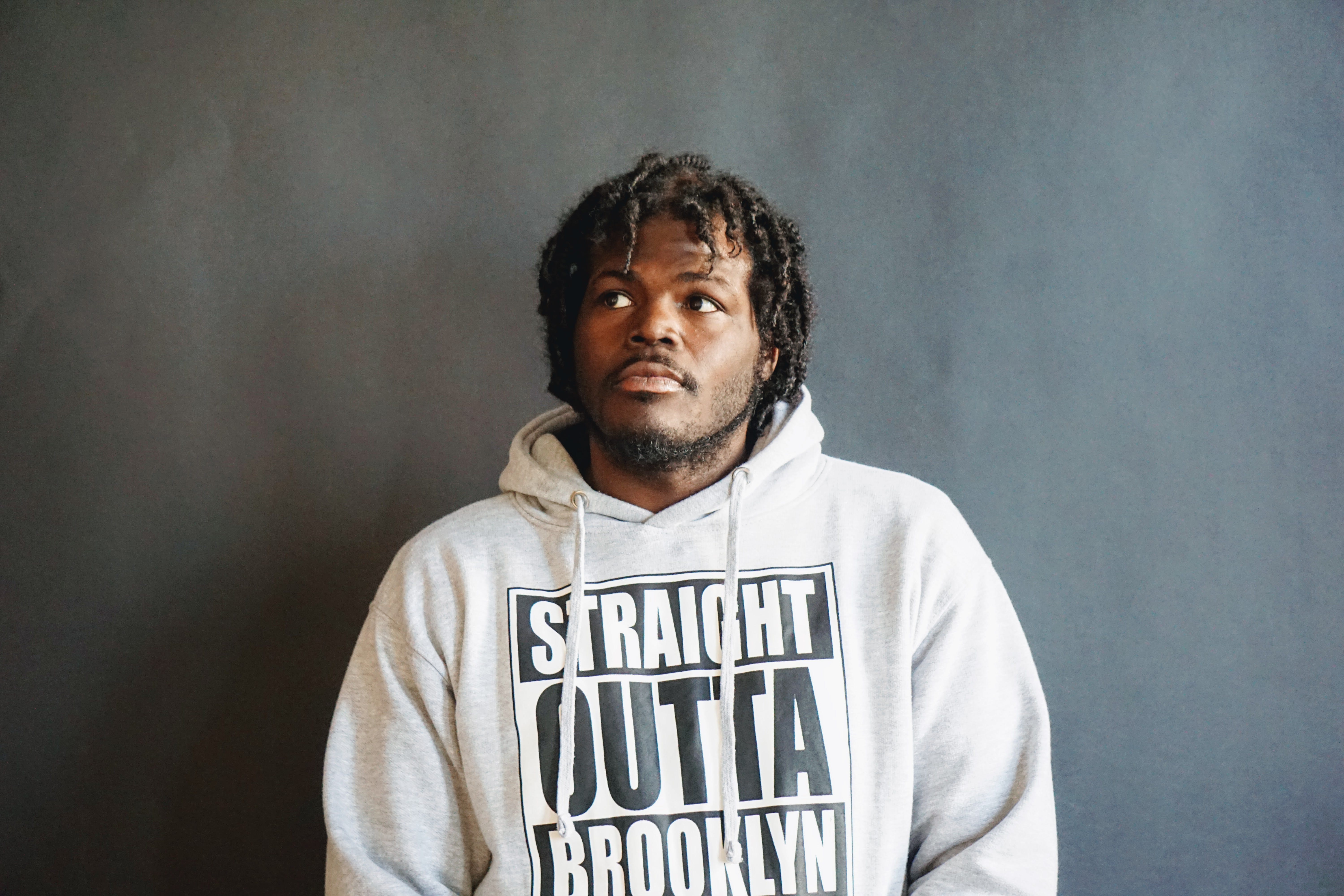
There’s so much to be said about the tender age of 17. You’re definitely still a teenager, but in many ways, you’re unrecognizable from who you were when you first became one at 13. At 17, you think you know everything and that you’ll have the whole “adulthood” thing in the bag once 18 rolls around. But that couldn’t be further from the truth; because at 17, you’re still a child figuring out the world, with eight more years before your prefrontal cortex will fully develop. In “normal” circumstances, you’re in high school, under the care of an adult guardian, and possess the metabolism of a Greek god you’ll yearn for come your 30th birthday. All of the “big and important” things you can fathom at that age are happening—prom, graduation, and college/life after high school. In the case of now late twenty-something Brooklyn native Rameen “Dwayne” McCord (he/him), those celebrations and transitions were right around the corner until he was arrested for attempted robbery and third-degree robbery two months shy of his graduation.
The youngest of six, the self-identified “baby of the family,” Dwayne was tried and convicted as an adult in New York at 17 years old. He was ordered to serve six years but would be given more time after getting into an altercation during his incarceration. Thus, Dwayne dealt with the growing pains of being in your late teens and early twenties from behind bars.
Before being incarcerated, Dwayne was in high school and kept himself occupied by participating in after-school programs and working. He was a member of Big Brother’s Safe in My Brother’s Arms (SIMBA) program and was set to be one of the top ten students for New York’s Vocational Rehabilitation Services for High School Students (VESID) program. He was a point guard on his school’s basketball team and was connected to the Parks Department to work for a stipend.
After some time of having access to these opportunities, Dwayne revealed that it started to get to his head. No one could tell him anything. He had his own money, the prospect of college, and, thanks to his mom, an array of Jordans to boost his confidence. Dwayne partly ascribed those sides of him to his being a Leo, the fiery lion of the 12 Greek zodiac signs. He described Leos as self-assured and headstrong people who don’t regularly take well to being told what to do. Although those descriptors can come off as giving Leos a bad rep, these lions are also understood to be highly loyal and protective. When you get to know his story, you can also see those characteristics in Dwayne as he went above and beyond to support his friends. But unfortunately, his loyalty didn’t manifest in the best way back when he was 17.
I never really need to rob people because my mother always made sure we was good. But I also have friends I always used to look out for…I’m not gon’ say we was healthy with money, but I didn’t really need [to rob]. I was a baby, I had all the Jordans and stuff like that. So, a lot of my friends would be mad. And I used to tell them, ‘let’s go rob somebody for they sh*t.’ And they used to think about it like [and say], ‘why would you think about it like that? Your mom just bought you sneakers.’ [But I’d say,] ‘alright, you my mans, so we might as well think of a way to come up.’
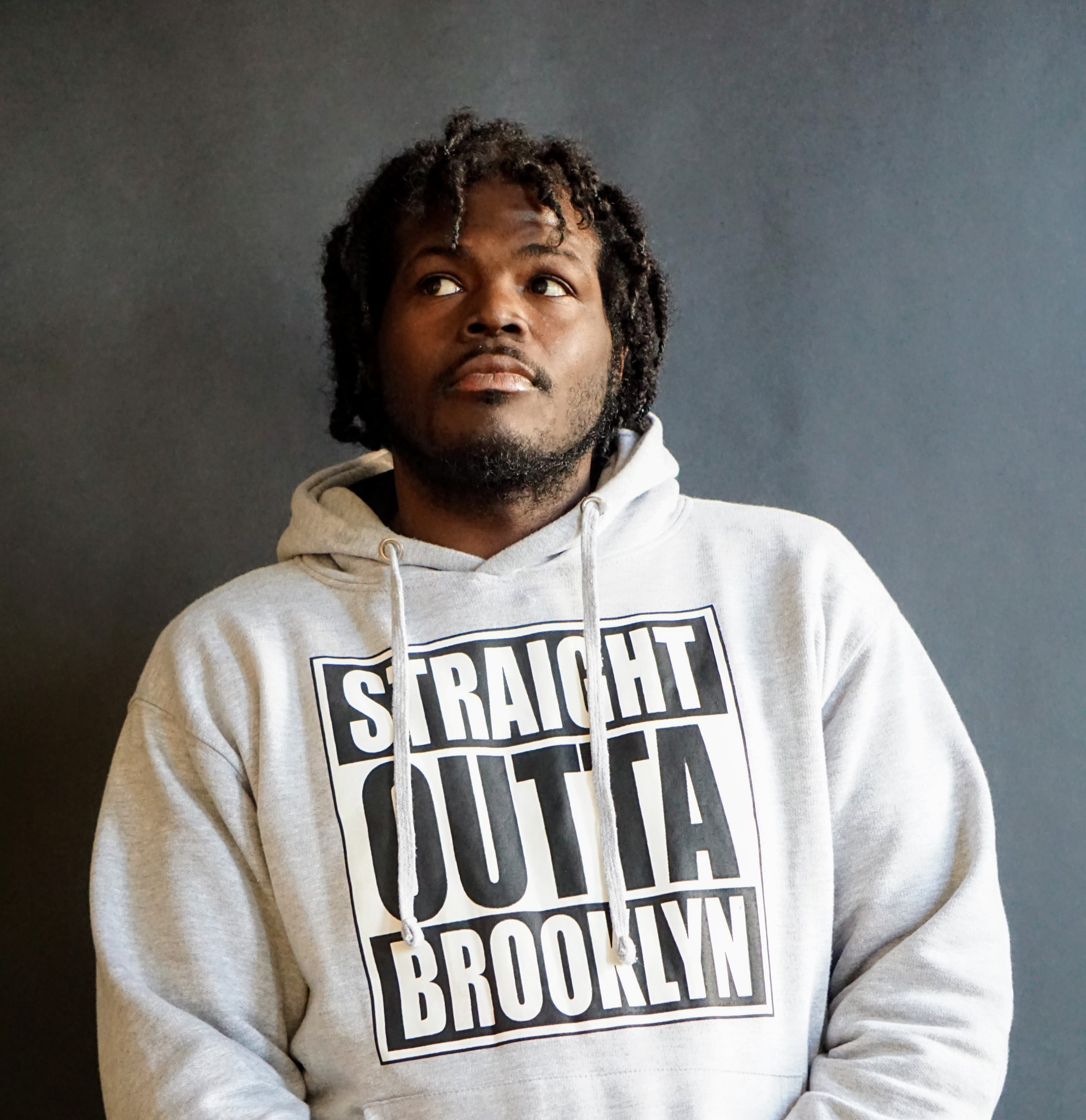
Dwayne’s perception of loyalty to his friends was costly. He identified himself as being a “bad kid” who “bothered people” and had “stupid thoughts,” especially after smoking weed. By 2012, his loyalty had caught up to him. He was arrested while trying to "help" a friend. But, little did he know, his friend snitched on him in the end.
So at the end of the day, it comes with the repercussions. That’s what a lot of people got to realize. Don’t always think that you’re not going to get caught. It’s somebody that’s going to jam you up, and [you] get caught. I tell people just hustle with legal jobs […] Get you a job in the morning time. Then you get out at a certain time. Two hours after that, you get ready for your other job. That’s how I look at it.
Jail is just all negative. It’s all negative…People will tell you, ‘oh, this is the good part of jail, or this was the good part of jail.’ It’s really not. Jail was not good. Period. You’re doing time, especially if you’re going upstate.
One of the most glaring and intolerable realities of his time in prison was the next-to-none wages Dwayne and his fellow inmates received for their work. This fact might not surprise those aware of the exception in the Thirteenth Amendment that permits slavery and involuntary servitude as a punishment for a crime: the basis for the horrors of the American carceral system. Nevertheless, the statistical facts and the stories about the conditions of incarceration are always disconcerting. According to a study posted by the Prison Policy Initiative (PPI) in 2021, New York prison inmates estimated they needed a minimum of $175 a month to get by. This minimum permits them to purchase just enough commissary food to supplement the notoriously subpar meals provided by the facility and other essentials (i.e., clothes, personal care products, and family phone calls). Additionally, being able to afford these essential expenditures is made virtually impossible for inmates due to the deplorable in-prison employment wages.
The same PPI study found that inmates reportedly earned less than $0.25 an hour on average, equating to roughly $31 a month. Thus, the only way achieving the necessary $175 a month became close to possible was through receiving extra support from loved ones to bolster their finances. Sadly, not all inmates have this additional support from friends and family.
As a result, there has been a push amongst those who want prison reform to raise the minimum wage for New York prisoners. Recently, Senate Bill S287 sponsored by NY Senator Zellnor Myrie was introduced to raise the minimum wage for inmates to be $3.00 "in order to end the last vestiges of slavery and embrace the spirit and promise of the Thirteen Amendment of the United States Constitution.” (I’m not sure how a $3 minimum wage will be the final blow to the remnants of American slavery when other human rights violations are still committed in the carceral system...but okay.)
[Prison] It’s legally slavery. Like literally. See how we work for like 15 hours, 16 hours? We’re working for $0.14. $0.07. That’s not [enough]...you’re not seeing nothing. So you’re going to be hungry.
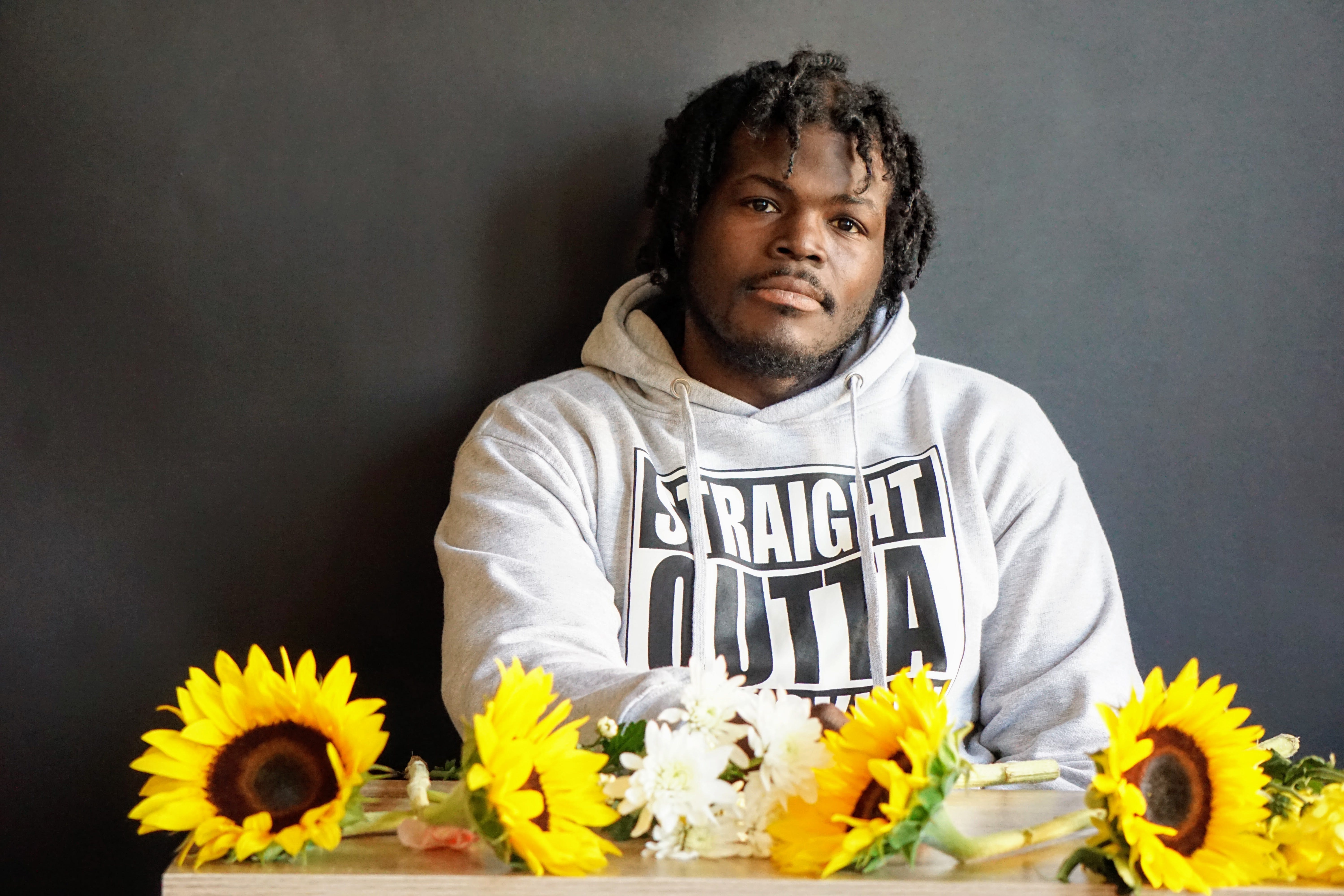
When I asked Dwayne if he had a support system to help him combat these paltry conditions, he sarcastically smiled, pushed his hands away from himself, and immediately responded:
Out of sight. Out of mind. All I’mma say is: out of sight. The only one that I can say is Rakim. Rakim was sending me letters. He was making sure the phone was on, making sure I was okay. My brother Rakim used to send me money and stuff like that. But, when you’re in jail, you don’t really get supporters unless you got a lover [...] I just feel like people out here getting their lives together. They’re not going to remember that they need to help you every week. They don’t even need to remember you. They don’t even need to help you every week. You put yourself- I put myself in jail [...] It was my time to do my time. I was out here making f*cked up decisions.
Throughout the conversation, Dwayne displayed a sense of accountability for the actions that led to his incarceration. However, it didn’t make hearing his stories from prison any less upsetting. Right near the beginning of his bid, his mother passed away, and he had to process it under devastating conditions. While comparing his experience in prison to that of slavery, he also discussed the exuberant racism perpetuated by corrections officers. By this point, Dwayne wasn’t the first person I interviewed who acknowledged how much more exaggerated the racism is in the facilities located in rural, predominately white New York communities. Ask any native POC New Yorker who has experienced both the cities and the surrounding communities, and they’ll tell you that while “blue” New York state is famous for being “liberal,” “woke,” and “diverse,” the racism is still there and is insidious.
Dwayne mentioned corrections officers referring to inmates as wild animals, monkeys, and baby gorillas on several occasions.
They’d just say mad racist sh*t they used to say back in the day. Like, for Halloween, I was in my cell, [and] I was working out. And the C.O. came by, he was like, ‘you don’t even gotta tell me. I know what you gonna be for Halloween.’ I just looked at him [thinking], ‘how the f*ck we going to be anything? We in jail.’ And he was like, ‘you gon’ be a baby monkey. A baby gorilla.’ That’s racist. That’s racist. And the crazy part is you can’t do nothing. You gotta grievance them. You can’t do nothing to them [...] They gon’ do mad funny stuff that you’re not going to agree with as a Black person.
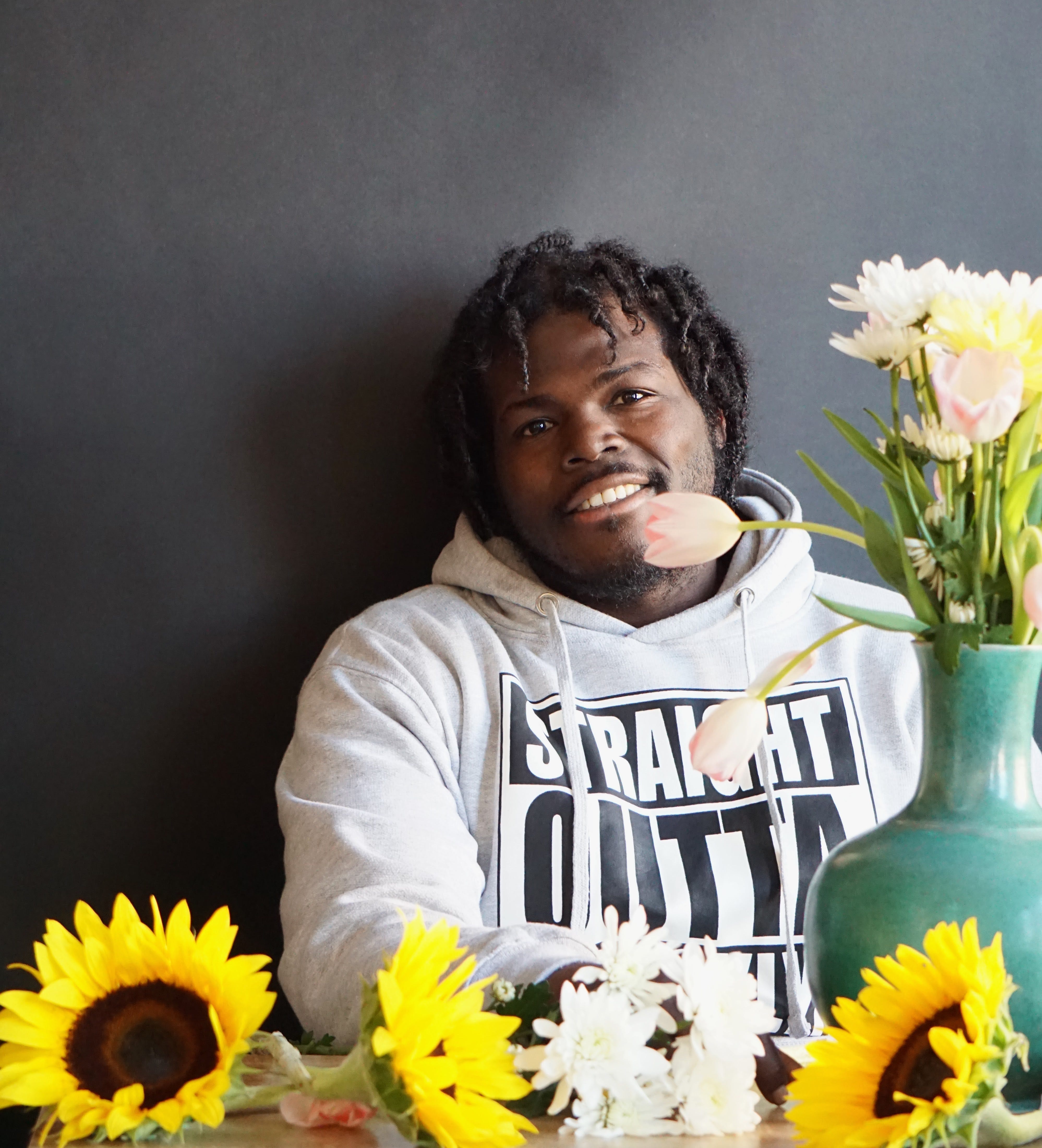
The most frustrating part of it all was the lack of power he had in the situation. Although Dwayne had the right and access to file grievances against the officers for their racial prejudice, creating a paper trail worked against him. Officers often beat him up for ratting them out. He was especially frustrated when he knew he could defend himself by fighting back but couldn’t because it would result in him getting a new charge and conviction that would prolong his time in this abusive situation. To this day, Dwayne still deals with back issues.
“When you getting beat with metal batons and stuff like that in jail, that will do it for you. My back was messed up for like a whole month. Like a whole month. I couldn’t move. I couldn’t get out of bed. No nothing. I couldn’t move. I can’t get back to bed. They had to send me to Albany Meds.”
Through retelling stories like this one, just how young Dwayne was when he was incarcerated came up time and time again. Although this may seem trivial to many, he started talking about the concoctions he would make with the commissary food he had about halfway through our conversation. “I used to like to eat,” he prefaced. On some occasions, he’d stockpile snacks over a week to create pies to stretch out what he had. He also described slathering peanut butter on one honeybun and jelly on another before combining them to eat a “PB&J honeybun sandwich.” His eyes lit up, and he cracked a smile as he described the process both with his words and with hands that mimicked the motion of sandwiching the two halves. Although his creativity mostly came from a place of scarcity, the fondness he had for those brief moments of youthful creation through food was still there.
Dwayne’s story of those more cherished moments was quickly stunted by sharing his experience behind the wall with lifers in the “worst prisons,” including Attica, Clinton, Comstock, Elmira, and Auburn. The smile went away, and the excited pitch in his voice dissipated. He recognized his poor anger management was a factor in his moving around. To many people, including Dwayne, these were just consequences he had to face, but I couldn’t overlook how much “messing up” at such a young age cost him. He was not afforded the luxury of being a young person “figuring themselves out” or simply “not knowing any better.”
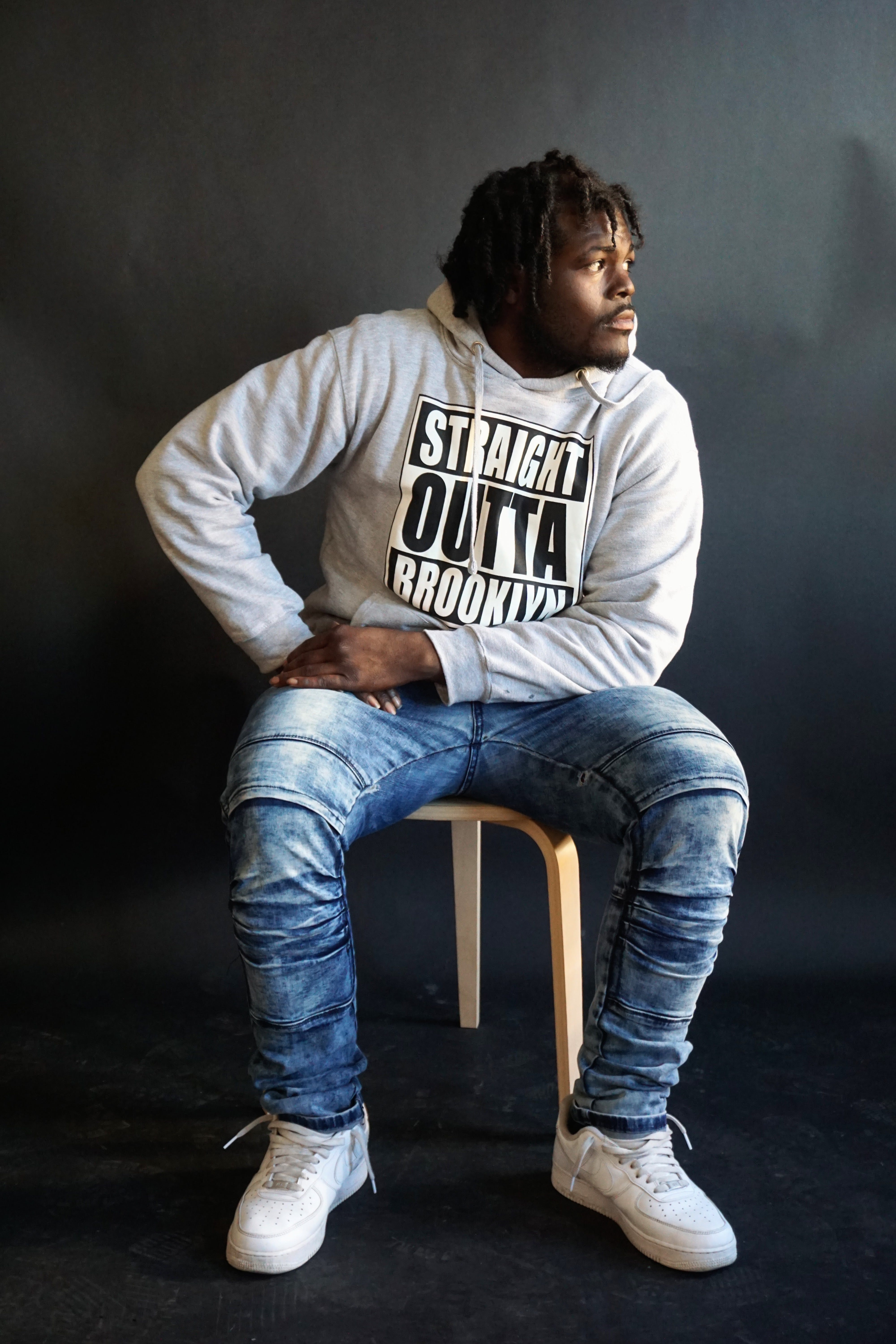
But in that darkness eventually came light. Dwayne let down his anti-social, angry exterior to begin making friends. During that time, he met Ty, with whom he is still friends, back when he struggled with managing these anger issues. Ty helped Dwayne calm down when he lacked anger control and wanted to act out. He would remind Dwayne of the loving family that awaited him, and that his return was contingent on staying out of trouble. In due time, Dwayne started to recognize that the people who provoked him were purposely baiting him to ruin his chances of leaving. He learned he was much better off not feeding into their taunts because, in the end, he would be the one facing the consequences.
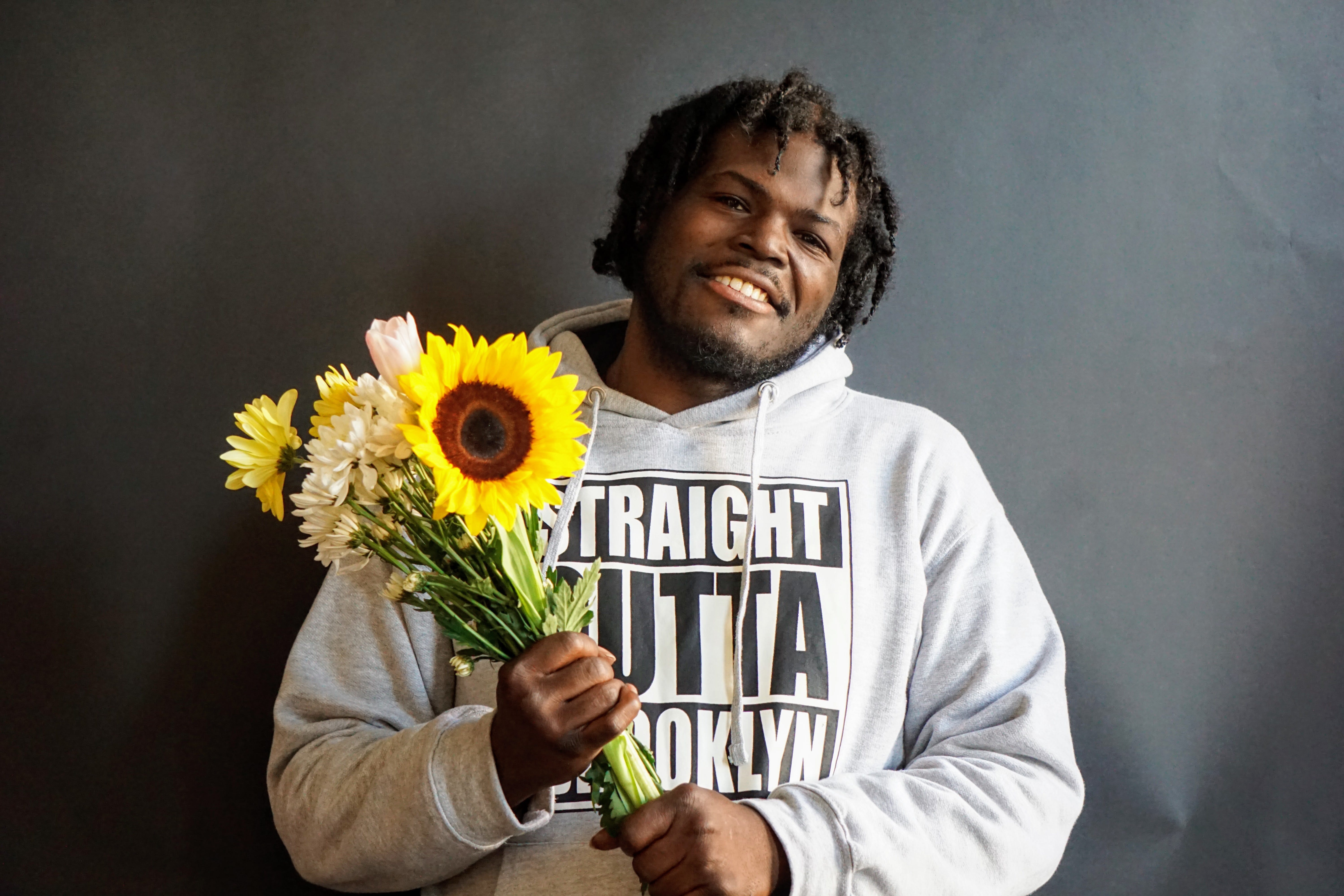
Dwayne was finally released in 2018. Since then, he has established a new trajectory for his life. He has a one-year-old son he calls his twin because they look so alike. Joy for him is stability so he can provide his son and his family with a home and comfortable lifestyle. He hopes to have more steady work soon but has a newfound appreciation and perspective on earning money. Yes, the love for Jordans is still there, but he now knows that his responsibilities to his loved ones come first. Overall, Dwayne wants to be independent because that equates to happiness for him.
Practicing his anger management skills has worked well for him. Today, being around angry people makes him uncomfortable and pushes him to make sure he’s around those who possess the same or more emotional control he has. He channels his emotions through comedy and laughter, radiating the positivity he was denied during his years in prison.
I'm happy with waking up and coming to the job every day. I'm happy with me living in my Black skin and knowing who I am every day [...] I just like to enjoy myself […] I can’t stand an angry person around me. I just can’t. I would say the most off-the-wall sh*t for you to laugh [and say] ‘yo, you just made my day.’ That’s just who I am.
Dwayne is confident the future ahead of him is bright and that it will have the love and security he didn't have in prison. Most importantly, he prioritizes building himself back up to become more comfortable in who he is and enjoy what life has in store.